The geomembrane welding machine industry is evolving rapidly. According to a recent industry report, the market is expected to grow at a CAGR of 7.5% by 2026. Innovations are driving these changes, including advancements in automation and precision. As organizations seek more sustainable solutions, the demand for effective geomembrane installations increases.
Dr. Emily Chen, an expert in geomembrane technology, emphasizes the importance of these machines. She states, “The future of geomembrane welding is all about efficiency and reliability.” This highlights a growing trend towards machines that not only improve productivity but also enhance the quality of welding seams.
Companies must navigate challenges, like adapting to new technologies. Current processes may not be adequate for the innovations on the horizon. Stability and performance remain crucial factors, requiring consistent quality control. Enhancing these aspects will be vital as the industry progresses towards more advanced solutions.
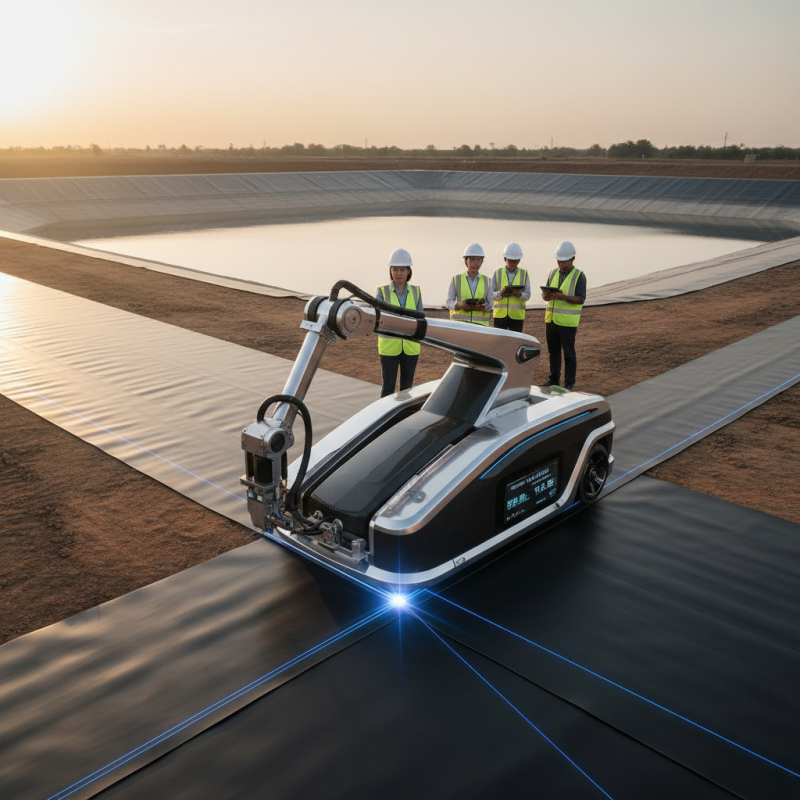
The year 2026 is poised to bring exciting advancements in geomembrane welding technology. Innovations in welding machines promise improved efficiency and precision. New techniques are emerging, allowing for faster installations and lower material waste. These machines are designed to handle various geomembrane materials more effectively. However, the challenge lies in ensuring the durability and quality of the welds.
As technology evolves, training operators becomes crucial. Advanced features in welding machines require skilled personnel to operate them optimally. There is often a gap between innovation and practical application. Users must adapt to new technologies while maintaining traditional skills. Observing the outcomes of these advanced techniques is essential for future improvements. Feedback from real-world applications can illuminate areas needing enhancement, ensuring that innovations truly meet the demands of industry professionals.
The geomembrane welding machine market is experiencing exciting changes as we approach 2026. One major trend is the push for automation. Companies are increasingly investing in automated welding technologies to enhance efficiency. These machines can perform consistent and precise welds at a faster rate. This innovation minimizes human error, but it raises questions about operator skill development.
Sustainability plays a crucial role in shaping market trends. Eco-friendly materials and energy-efficient machines are gaining traction. Manufacturers are exploring ways to reduce waste during the production process. However, this shift can sometimes lead to higher initial costs. Moreover, not all projects can adopt these green innovations seamlessly.
Another factor is the growing demand for custom solutions. Many businesses seek machines tailored to specific project needs. While this can lead to increased satisfaction, it also complicates the manufacturing process. Customization may delay delivery times, affecting project timelines. As we navigate these trends, industry players must balance innovation with practical considerations.
The geomembrane industry is witnessing a transformation driven by advanced materials. These materials improve durability and flexibility, making them ideal for various applications. Innovations in polymer technology have resulted in lighter geomembranes that resist punctures and chemicals. They are easier to handle, leading to more efficient installation processes.
Tips: Always assess material compatibility with specific project requirements. Not all innovations suit every purpose.
Welding techniques are also evolving. New methods focus on better energy efficiency and precision. For instance, ultrasonic welding has gained traction. It minimizes heat input, reducing the risk of damage. However, many professionals still rely on traditional methods. This can slow down progress and limit potential advantages.
Tips: Experiment with different methods to find the best fit. What works for one project may not work for another.
In addition, the industry is looking at sustainable practices. Biodegradable materials are being tested, yet their performance compared to traditional options raises questions. The balance between sustainability and long-term reliability is a dilemma many face. This ongoing evolution creates opportunities and challenges alike.
The landscape of geomembrane welding is evolving rapidly. Automation and robotics are becoming key players in this field. These technologies streamline the welding process, enhancing precision and reducing human error. Robots can perform repetitive tasks with consistency, ensuring higher quality seams in geomembrane installations.
However, integrating automation is not without its challenges. There may be a steep learning curve for operators who are not accustomed to robotic systems. Additionally, while robots excel at certain tasks, they may lack the adaptability needed for complex job sites. This can lead to delays and increased costs if the systems aren't properly calibrated.
Investing in training programs and support systems is crucial. Workers must understand how to operate and troubleshoot these technologies. As the industry moves forward, companies must find a balance between innovation and practical application. This reflection is essential for maximizing the benefits of automation in geomembrane welding processes.
In recent years, the geomembrane welding industry has focused on environmental sustainability. Innovations aim to reduce waste and energy consumption. Using eco-friendly materials is becoming a priority. Many new machines incorporate features that improve efficiency. They enable cleaner welding processes, minimizing emissions. The integration of solar power in equipment has gained traction. It supports reducing reliance on fossil fuels, which is a positive trend.
However, challenges remain. Not all materials used in geomembrane welding are recyclable. The industry still grapples with the disposal of non-biodegradable waste. Many welding techniques traditionally generate excessive heat. This can lead to environmental concerns if not carefully managed. There's still room for improvement in creating more sustainable practices. Encouragingly, discussions about these issues are emerging among professionals.
Moreover, training programs are evolving to include sustainable practices. Many companies are now advocating for a culture of responsibility. Educating workers about eco-friendly techniques is crucial. Industry stakeholders must work together. They should explore innovative solutions for waste reduction. By embracing these changes, the geomembrane welding sector can lead the way in sustainability. It's a step forward, but the journey is just beginning.
| Cookie | Duration | Description |
|---|---|---|
| cookielawinfo-checkbox-analytics | 11 months | This cookie is set by GDPR Cookie Consent plugin. The cookie is used to store the user consent for the cookies in the category "Analytics". |
| cookielawinfo-checkbox-functional | 11 months | The cookie is set by GDPR cookie consent to record the user consent for the cookies in the category "Functional". |
| cookielawinfo-checkbox-necessary | 11 months | This cookie is set by GDPR Cookie Consent plugin. The cookies is used to store the user consent for the cookies in the category "Necessary". |
| cookielawinfo-checkbox-others | 11 months | This cookie is set by GDPR Cookie Consent plugin. The cookie is used to store the user consent for the cookies in the category "Other. |
| cookielawinfo-checkbox-performance | 11 months | This cookie is set by GDPR Cookie Consent plugin. The cookie is used to store the user consent for the cookies in the category "Performance". |
| viewed_cookie_policy | 11 months | The cookie is set by the GDPR Cookie Consent plugin and is used to store whether or not user has consented to the use of cookies. It does not store any personal data. |