Choosing the right Stainless Steel Hollow Bar begins with the job it must do, not just its price per kilogram. A shaft exposed to salt spray may need different corrosion resistance from a machined spacer used indoors. Buyers should compare grade, manufacturing route, outside diameter, bore size, straightness, and machining allowance. Small differences matter. A few millimeters of extra stock can mean more cutting time and material waste.
For practical context, John R. Davis edited the technical reference Stainless Steels, a respected resource on stainless-steel properties and selection. A useful principle consistent with that materials-selection approach is: “Choose for the service environment, not the catalog label.” This is an editorial summary, not a verified verbatim quotation from Davis. Austenitic grades such as 304 and 316 suit many general and corrosive environments, while duplex grades may offer higher strength for demanding applications. These are starting points, not automatic answers. Heat, chemicals, finish, and fabrication can change the choice. Ask suppliers for traceable material documentation and confirm tolerances before ordering. In this guide, we compare common hollow-bar options, their practical trade-offs, and the questions buyers should ask. One caution remains: the cheapest bar can become costly after machining. A sample helps. So does a careful review of the actual service conditions.
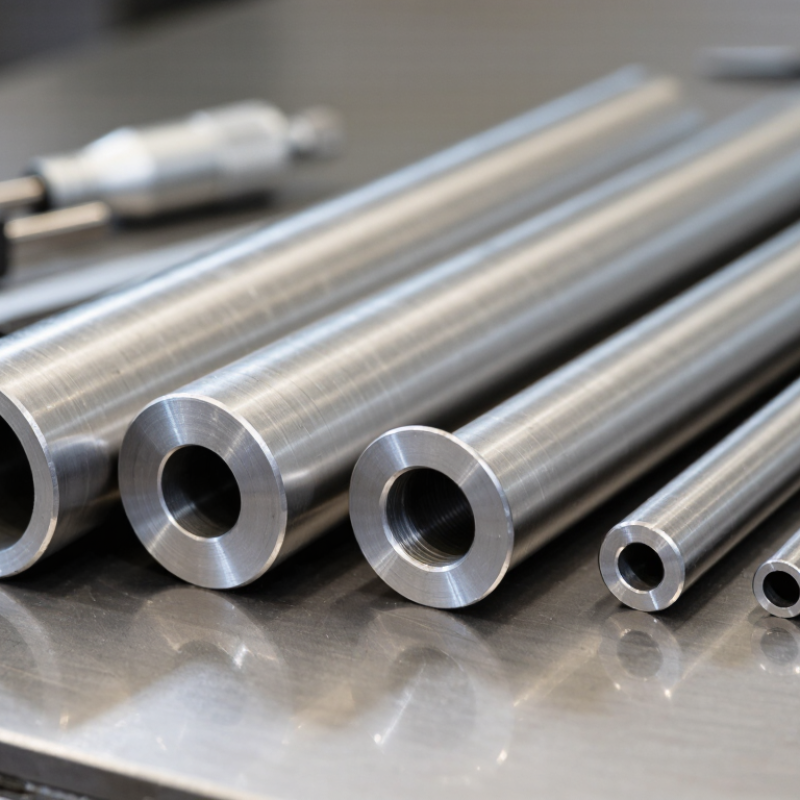
Stainless steel hollow bar is a thick-walled tubular product with an open center. Buyers often machine it into shafts, sleeves, bushings, or hydraulic components. Unlike ordinary pipe, it is commonly selected for its machining allowance and mechanical performance. The term is not used consistently across every supplier’s catalog, so check the actual dimensions and product specification.
ASTM A511/A511M covers seamless stainless steel mechanical tubing for mechanical applications. It sets requirements such as grades, dimensions, tolerances, and testing provisions. That makes it relevant to some hollow-bar products, but the label alone does not prove compliance. Confirm that the quoted product is seamless, that the required grade and dimensions are covered, and that the order documents identify the applicable edition. A511/A511M is not a universal specification for every hollow bar sold.
Tips: Ask for a material test report and compare its heat number with the product marking. Check outside diameter, inside diameter, and wall thickness; a small mismatch can create extra machining work. If corrosion resistance matters, specify the service environment too. A familiar grade may still disappoint in warm, chloride-rich conditions.
In 2026, choosing a stainless steel hollow bar starts with its service environment, not just its price.
Grade 304 is commonly specified with about 18% chromium and 8% nickel, though exact chemistry depends on the applicable standard. It suits many indoor, architectural, and general-purpose applications. Think handrails, machine parts, or equipment exposed to ordinary moisture. Not every site.
Grade 316 typically contains about 2–3% molybdenum. That addition improves resistance to pitting and crevice corrosion, especially where chlorides are present. Coastal spray or salt-bearing wash water may make 316 the safer choice. It is not immune to corrosion, though. Poor cleaning, stagnant deposits, and unsuitable surface finishes can still cause trouble.
The trade-off is practical: 316 usually costs more, while 304 may be adequate in milder conditions. A grade label alone can hide important details. Check the material certificate, dimensions, finish, and intended exposure before ordering. For machined hollow bar, discuss tolerances and machining needs as well. Both grades can work-harden during cutting, so process settings matter. I would not choose 316 automatically; the extra alloy is useful only when the environment justifies it.
Duplex 2205 hollow bar is worth assessing when a component faces chloride exposure and mechanical loading. Its typical chemistry includes about 22% chromium, 5% nickel, and 3% molybdenum. Actual limits vary by specification and heat. Check the material certificate rather than relying on a sales description.
That balance matters. Chromium and molybdenum support resistance to pitting, while the duplex structure combines ferrite and austenite. In practical terms, a machined spacer or pump shaft may gain useful strength without requiring an unusually large section. Still, “corrosion resistant” does not mean immune. Warm seawater, deposits, crevices, and poor surface finishing can change performance.
For buyers, confirm the required standard, outside diameter, bore, straightness, and machining allowance before comparing quotes. Ask for traceable heat-test results, including chemistry and mechanical properties. Welding or heavy machining may affect the finished component, so discuss the process with a qualified materials engineer. I would not choose 2205 from the alloy name alone; the service details can be easy to underestimate.
How to read this chart: Duplex 2205 combines about 22% chromium, 5% nickel, and 3% molybdenum, offering a different alloy balance from austenitic 304L and 316L and super duplex 2507. Values shown are representative compositions in weight percent, not guaranteed limits; actual chemistry varies by product specification. Choose a hollow bar grade based on the service environment, required mechanical properties, applicable standard, and verified material certification.
2026 Best Stainless Steel Hollow Bar Types for Buyers?
Choose the grade from the service environment, not just the product label. For chloride exposure, 316L usually resists pitting better than 304, but warm, concentrated salt can still cause attack. The Nickel Institute’s stainless-steel selection guidance uses PREN to compare pitting resistance; typical values are about 24 for 316L and 35 for duplex 2205. PREN is a screening tool, not a field guarantee. Crevices, surface finish, and cleaning matter. They often get overlooked.
Structure matters too. The Nickel Institute’s duplex fabrication guidance reports that duplex grades commonly provide roughly twice the yield strength of austenitic grades. That can help when a hollow bar must carry load without excessive section size. But higher strength does not automatically mean easier machining. Check the supplier’s condition, hardness, and machining recommendations before ordering; tool wear can rise if the stock is harder than expected.
For a corrosive, heavily loaded part, duplex may be a sensible candidate. For routine machining in mild conditions, 303 or 304 may be more practical, subject to corrosion requirements. Ask for a material test certificate and verify chemistry, heat treatment, dimensions, and whether the bar is seamless or welded. A small mismatch in bore size can waste hours on a lathe. One caveat: published alloy data cannot replace testing in the actual process fluid.
For stainless steel hollow bars, verify the dimensions against the drawing and purchase order, not a supplier’s nominal description alone.
Measure outside diameter at several positions and rotate the bar to catch ovality. Check the bore with a suitable gauge; a clean, bright opening can still conceal taper. Wall thickness matters. Compare readings around the circumference and near both ends, because uneven stock can affect machining allowance.
Use calibrated instruments and record the actual readings. ASTM A511/A511M covers seamless stainless steel mechanical tubing, but the required dimensions and tolerances must still be agreed for the order.
The World Stainless Association reported 58.4 million tonnes of global stainless steel crude production in 2023, up 4.6% from 2022, in its Stainless Steel in Figures 2024 report. That scale makes clear specifications more useful, not less. Small differences matter.
Request a mill certificate that identifies the grade, heat number, chemistry, mechanical properties, and applicable product standard. Match its heat number to the bar’s marking and packing documents. A certificate can look complete yet be difficult to trace. Check it carefully.
| Cookie | Duration | Description |
|---|---|---|
| cookielawinfo-checkbox-analytics | 11 months | This cookie is set by GDPR Cookie Consent plugin. The cookie is used to store the user consent for the cookies in the category "Analytics". |
| cookielawinfo-checkbox-functional | 11 months | The cookie is set by GDPR cookie consent to record the user consent for the cookies in the category "Functional". |
| cookielawinfo-checkbox-necessary | 11 months | This cookie is set by GDPR Cookie Consent plugin. The cookies is used to store the user consent for the cookies in the category "Necessary". |
| cookielawinfo-checkbox-others | 11 months | This cookie is set by GDPR Cookie Consent plugin. The cookie is used to store the user consent for the cookies in the category "Other. |
| cookielawinfo-checkbox-performance | 11 months | This cookie is set by GDPR Cookie Consent plugin. The cookie is used to store the user consent for the cookies in the category "Performance". |
| viewed_cookie_policy | 11 months | The cookie is set by the GDPR Cookie Consent plugin and is used to store whether or not user has consented to the use of cookies. It does not store any personal data. |